Wednesday, October 6, 2010

Saint Bruno and the Carthusians--October 6


On October 6, we honor the great 11th-century German founder of the Carthusian order of monks, St. Bruno. The form of monasticism that he founded was (unlike the Benedictines) based on a solitary, hermit-style of life, inspired by the early Christian hermits who lived in the Egyptian deserts.

The Carthusians, though always rather few in number, have had great influence on the spiritual life of the Church throughout the centuries.

If you have not yet seen the film "Into Great Silence," this is a good time to do so. It is a truly remarkable film about the Carthusian monastic experience. Note: it is almost entirely silent and it is long, so be prepared to settle in for several hours--but it is well worth it!

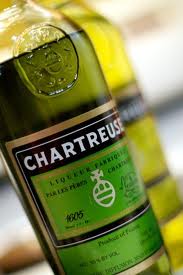
Rather than eating something in St. Bruno's honor, I propose that we take a sip or two of the famous liqueur made by the Carthusians ("Chartreux," in French) called Chartreuse. This is a sweet, strongly herbal (130 Alpine herbs to be precise) alcoholic drink, that promotes digestion. (The drink also gave the name to the color: a bright yellow-green.)

Many other orders of monks and nuns have made foods and drinks enjoyed by millions around the world. Soon we'll devote a special post to some of these delicious concoctions.

Monday, October 4, 2010

October 4: Saint Francis of Assisi


Yikes!
I was traveling all day and nearly let the day go by without remembering with you the man who is probably the most famous saint in Christendom: Francis of Assisi, beloved by Christians of every stripe, and many others besides. (In particular, his love for animals has endeared him to a great many people.)

May I refer you to pp. 273-4 of A Continual Feast for a discussion of his remarkable life--and for a recipe for the one and only food that he is known to have loved: Mostaccioli, which are delicious little almond cakes.

You might like to do some reading about this amazing man, and if so I recommend The Little Flowers of Saint Francis--full of anecdotes about his life and miracles, and quite fun to read!

And as you remember him--and that great Franciscan spirit--you can also say the beautiful prayer that is associated with him:

Lord, make me an instrument of your peace;
where there is hatred, let me sow love;
where there is injury, pardon:
where there is doubt, faith;
where there is despair, hope
where there is darkness, light
where there is sadness, joy
O Divine Master,
grant that I may not so much seek to be consoled as to console;
to be understood, as to understand;
to be loved, as to love;
for it is in giving that we receive,
it is in pardoning that we are pardoned,
and it is in dying that we are born to Eternal Life.
Amen.

You can also sing this prayer as the beautiful hymn: "Make me a channel of your peace." You can hear it sung at: http://www.youtube.com/watch?v=ZI1Gst7pEqc&feature=related

Thursday, September 30, 2010

Thanking St. Jerome for the Bible on September 30


I love this image of Saint Jerome--as the Renaissance imagined him: in his study. (I keep it on my desktop at work.)

On Sept. 30, we should thank him for the Bible: he was the great editor of the Bible, and in the 4th century he translated it into Latin--that's the famous "Vulgate"--to make it widely accessible. He said that everyone should read Scripture. Jerome was also a scholar of Hebrew: he went to the Holy Land to study with learned rabbis when he was already well along in years.

Jerome was clearly a rather crusty man--one who did not suffer fools (or heretics) gladly. But he was a great scholar, and we should remember him today and thank him for all he gave us.

What shall we eat in his honor? Let's keep it simple and to the point: how about a sheet cake baked in a large rectangular pan, with white icing like a page of the Bible, with some great Biblical quote written on top? Perhaps "In the beginning was the Word"?--but you may have other thoughts, and you can hardly go wrong.

Wednesday, September 29, 2010

Grilling for the Feast of the Archangels

Today is the Feast of the Archangels Michael, Gabriel and Raphael. Saint Gabriel is named twice in the New Testament -- when appearing to Mary at the Annunciation and when foretelling to Zachary the birth of John. However, it is commonly supposed that he was also the angel who spoke to Joseph and the shepherds. The angel Raphael appears only in the Book of Tobias in a capacity as healer and protector of Tobias. Saint Michael, meanwhile, appears twice in the Old Testament and twice in the New. He is famous for his role as protector. Many people learn the Prayer to St. Michael in their childhood and it is one worth invoking as an adult, too:

Saint Michael the Archangel, defend us in battle.
Be our protection against the wickedness and snares of the devil.
May God rebuke him, we humbly pray;
and do Thou, O Prince of the Heavenly Host -
by the Divine Power of God -
cast into hell, satan and all the evil spirits,
who roam throughout the world seeking the ruin of souls. Amen.

We have some powerful intercessors in the archangels!

In honor of St. Michael's role of conquering the devil, I made a "deviled" barbecue sauce from p. 273 of A Continual Feast. Together with the fiery kick to my sauce, I added a special ingredient to the charcoal itself -- alder wood chips. There are many different woods that can be used to add flavor when grilling (hickory and mesquite being perhaps the best known) and I was very happy with the results. Be sure to soak them in water for at least an hour before grilling so that they smoke rather than burn.

After preparing the barbecue sauce, all that is left to do is marinating the meat -- and grilling the hell out of it!


Wednesday, September 22, 2010

Our Daily Bread: Padre Pio Pizza


So many people have a great devotion to Padre Pio, a recently canonized saint in 2002. I knew very little about him- other than the fact that he suffered the wounds of Christ in the stigmata.

I was surprised to find that his feast day is my son Simon's birthday, September 23rd- AND that Padre Pio's birthday is the same as my own, May 25th. Needless to say, I feel very confidant that he will be a particular intersessor and guide as I parent my sweet 4 year old!

Just a few quick things about his life
1. The pinnacle of his apostolic activity was the celebration of Holy Mass. The faithful who took part witnessed the summit and fullness of his spirituality. He said of the Eucharist: "Do not be afraid to come to the Lord's altar to be fed with flesh of the Immaculate Lamb, because no one will better reconcile your spirit than your king, nothing will warm it more than his sun, and nothing will soothe it better than his balm"

2. John Paull II spoke at his canonization about Padre Pio's "diligent dedication to the ministry of the confessional." He demonstrated to the full his love of neighbour by welcoming, for more than fifty years, countless people who had recourse to his ministry and his confessional, his counsel and his consolation. He was almost besieged: they sought him in church, in the sacristy, in the friary. And he gave himself to everyone, rekindling faith, dispensing grace, bringing light. But especially in the poor, the suffering and the sick he saw the image of Christ, and he gave himself particularly to them.

3. On the level of social charity, he committed himself to relieving the pain and suffering of many families, chiefly through the foundation of the Casa Sollievo della Sofferenza (House for the Relief of Suffering), opened on 5 May 1956.

So how can we celebrate this beautiful saint? Why not follow his holy example. When was the last time we made a good confession? Can we make it to mass on his feast day? Can we make a cheritable donation for the poor/sick?

And as for the food for the feast...Padre Pio gives us a great oppertunity to go Italian! Originally from Benevento in Campania, Italy, where he was also ordained, it seems fitting to celebrate with pizza- as Campania boasts about it.

So whether you make it on your own, or order from your favorite spot- here's to Padre Pio!


Here is Simon (2 years ago!) helping us make pizza!

Tuesday, September 21, 2010

Celebrating St. Matthew: Taking an Unconventional Approach to Tradition


Who can forget the story of the calling of Saint Matthew? This tax-collector followed Christ to the end. There is a great deal we do not know about Matthew, but he has certainly left us with a tremendous legacy in many areas; his gospel is a great gift in and of itself. Much of our knowledge of the Nativity comes from Matthew. In addition, Matthew's is considered the most "Jewish" of the gospels; we see in St. Matthew's account of Jesus's life the strongest sense of Christ's Jewish identity.

But this beautiful example of a sinner-saint has been sadly neglected when it comes to culinary tradition. What, we wondered, did tax collectors eat? It seems that something expensive and lavish (skimmed off the top of many others' wages) would be appropriate. But also something somehow "Jewish". Here is our suggestion, with a modern twist: Matzoh Toffee. Decadent, and also (if you make it right), Kosher.

Here is the recipe, courtesy of David Lebovitz:

http://www.davidlebovitz.com/2008/01/chocolatecovere/

Monday, September 20, 2010

Pul-Kogi or Korean Beef Barbecue for September 20th, Feast of the Korean Martyrs (d. 1791 – 1867)


Andrew Kim and Companions, Missionary Martyrs

Few nations on the face of the earth have demonstrated the unique welcoming of Christ and his missionaries as displayed by the Korean people. In most lands, men and women wake up one morning to discover Christians in their midst, hearing the Good News of the Gospel for the first time because missionaries have arrived unbidden on their doorstep. In Korea, the Gospel was known and revered long before any priest dared to enter the country. Actually, the Church was invited into Korea by a convert to the faith.

The title Martyrs of Korea has been bestowed upon Andrew Kim and 102 companions who died at the hands of brutal opponents of the faith over a period of years. These martyrs represent the more than eight thousand Koreans who died in demonstration of the faith in their native land, displaying calm bravery and heroic fidelity.

The Catholic faith was brought to Korea in a unique fashion, the result of curiosity by the intellectuals of that land who were anxious to learn as much about the outside world as possible. They discovered some Christian books produced through Korea’s embassy to the Chinese capital, and one Korean, Ni-seung-houn, went to Beijing in 1784 to study Catholicism. There he was baptized Peter Ri. Returning to Korea, he converted many others. In 1791, when these Christians were suddenly viewed as foreign traitors, two of Ri’s own converts, Paul Youn and Jacques Kuen were martyred. This is hardly surprising even though it was tragic. Korea had long been the victim of foreign aggression, in particular by Japan. The Hermit Kingdom—as Korea has traditionally been termed—was concerned about alien powers overcoming the nation once again. As the Empires of Europe were at that time extending their spheres of influence across Asia, the Koreans were doubly concerned about the Christian faith, seeing it as a prelude to possible Western attack and as a threat to traditional Korean life.

Despite these obstacles, the Catholic faith endured in Korea so strongly that three years after the martyrdoms of Youn and Kuen, Father James Tsiou, a Chinese, entered the kingdom and discovered more than four thousand Catholics. He labored in the country until 1801 when Korean authorities martyred him.

Pope Leo XII (r. 1832-1829) established the Prefecture Apostolic of Korea in response to a plea from Korean Catholics who needed a greater Church structure for the growing community. In 1836, Bishop Lawrence Imbert managed to enter Korea, despite the fact that the government had banned all foreign influences and was hostile toward all non-native religions. Others followed Bishop Imbert, who labored until 1839 when a full scale persecution claimed his life and the lives of other European missionaries.

Meanwhile, Korean young men who wished to enter the priesthood were sent to Macau, which was owned by China but administered by Portugal. There they were trained and ordained. Andrew Kim Taegon was the first native priest ordained. He returned to Korea in 1845 and was martyred the following year.

Severe persecution followed, and Korean Catholics fled to the mountainous regions, where they established new parishes in exile. In 1864, the Korean government instituted a new persecution, one that claimed the lives of two bishops, six French missionaries, a Korean priest, and 8,000 Korean men, women, and children.


Some of the better known martyrs are:

Andrew Kim The first priest (shown in the image) to die for the Catholic Faith in that nation. He is sometimes called Andrew Kim Taugon. Andrew was a member of one of the highest-ranked noble families in Korea. He was educated in the faith and despite the threat of persecution; he maintained his devotion even when a government-sponsored program began in earnest in 1939 in all regions of the land.

Andrew went to Macao, where he received seminary training and was ordained. He returned to Korea to labor in the missions but was arrested by the authorities almost immediately after reaching his homeland. Joining his countrymen and European missionaries in prison, Andrew was martyred by Korean officials.

Lawrence Imbert Born in Aix-en-Provence, France, Lawrence entered the Paris Foreign Missions Society and was ordained with the express hope of serving the Church in its distant missions. His aspirations were fulfilled in 1825 when his superiors decided he was ready for the missionary work and sent him to China. There he labored for over a decade and proved himself so capable and respected a missionary that he was named titular bishop of Capse.

In 1837, he entered Korea in secret and devoted himself to the very difficult task of assisting the faith in the kingdom. Known as Bom among the Koreans, he added his strength to the growing Catholic population, eventually surrendering to Korean authorities in 1839 when the persecutions worsened. Korean Catholics were being tortured to reveal the whereabouts of foreign missionaries, and, rather than have innocent men, women, and children die to shield him, Imbert gave himself up as did Fathers Philibert Maubant and James Honore Chastan on August 11, 1839. After severe beatings, they were beheaded in Gae Nam Do, near Seoul, on September 21, 1839.

Columbia Kim A devout laywoman, Columba was martyred with her sister, Agnes, in 1839. She was twenty-six when arrested. Imprisoned, the women were pierced with red hot awls and scorched without mercy. Stripped of their clothes, they were placed in a cell with male criminals, but, to the surprise of their captors, the prisoners refused to harm them. Columba complained about such treatment for women, even Catholics—who were criminals in the eyes of the Korean government—and the authorities heeded her objection, ceasing the practice. Nevertheless, Columba and Agnes were sentenced to death and were beheaded at Seoul on September 26, 1839.

Peter Ryau A Christian Korean, Peter was only thirteen when he presented himself to the authorities as was demanded by the law of the land. For what his captors considered obstinate devotion to an outlaw creed, Peter was tortured with such excessive cruelty that his arms and legs were shredded. To demonstrate to the judges the severity of his treatment, Peter pulled away some of his torn flesh and threw it at their feet. The horrified judges were joined by an equally stricken group of on-lookers, and Peter was taken back to the prison and strangled on December 31, 1839.

Companions Others are commemorated in this glorious gathering of the blessed, including: thirteen year old Peter Yu Tae-Chol, slain for confessing the faith; Anna Pak A-gi, a simple woman who was not advanced in her doctrinal knowledge but went faithfully to death as a disciple of Christ and his Mother; John Nam Chong-sam, a high-ranked noble who served as a model of chastity, charity, and poverty until he was slain; Damien Nam Myong-hyok and Mary Yi Yon-hui, both martyred, were models of family life; and John Yi Kwong-hai, who dedicated himself in celebrating consecration to the service of the Church.

The Martyrs of Korea were canonized by Pope John Paul II on May 6, 1984, in Seoul, Korea. At the ceremony, the Holy Father declared that the Church in Korea was a community unique in the history of the Church. The pope said: “The death of the martyrs is similar to the death of Christ on the Cross, because, like his, theirs has become the beginning of new life.”


This article is an excerpt from “John Paul II’s Book of Saints” by Matthew Bunson, Margaret Bunson, Stephen Bunson, Pope John Paul II


Korean barbecue is a dish that was most likely enjoyed by many (if not all) of the Korean martyrs and is certainly one of the more popular of Korean delicacies. Here is one you can try at home. It's quite easy and so tasty.


Pul-Kogi recipe:

Ingredients

  • 1 pound flank steak or sirloin, thinly sliced
  • 6 cloves garlic, minced
  • 1/2 pear - peeled, cored, and minced
  • 2 green onions, thinly sliced
  • 4 tablespoons soy sauce
  • 2 tablespoons white sugar
  • 1 tablespoon sesame oil
  • 1 tablespoon rice wine
  • 1 tablespoon sesame seeds
  • 1 teaspoon minced fresh ginger
  • freshly ground black pepper to taste (optional)

Directions

  1. In a large resealable plastic bag, combine beef with garlic, pear, green onions, soy sauce, sugar, sesame oil, rice wine, sesame seeds, fresh ginger, and ground black pepper. Seal, and refrigerate for 2 to 3 hours.
  2. Preheat grill pan over high heat. Brush oil over grill pan, and add beef. Cook, turning to brown evenly, for 3 to 6 minutes, or until done.